Jump-to links:
Optical Drive Emulators (ODE) and Alternative Boot Methods
Repro PCBs (no donors) - Solderless / Soldering Required
ROM / RAM Backup & Restore Devices and Methods
News - Noteworthy Stuff
═════════════════════════════════════════════════════════════════════════════════════════

What is a flash cart?
In short, a flash cart is a video game cartridge that will allow you to play games (ROMs) on real hardware. In most cases, playing a game from a flash cart is identical to playing the actual game cart. Flash carts can vary in features between models, each with their own pros and cons. Flash carts exist for many retro consoles.
Most flash carts are extremely easy to use. All the newer flash carts have the games stored on memory cards, such as SD or CF. It's as simple as this: Load some games onto a memory card, insert the memory card into the flash cart, put the flash cart into your console and play.
Older flash carts did not have removable storage. Instead, they had internal memory in which to store the games. They required a programmer to flash games to the cart's memory. You'd plug the programmer into your computer (usually with a parallel cable), plug the flash cart into the programmer, then use software to write the game(s) to the flash cart's internal memory. So, the programmer can be thought of as a card reader like the kind you'd use for an SD card. Flash carts such as these are no longer being made, since it’s much easier to use modern flash carts with removable storage.
Flash cart developers are taking advantage of using removable storage by having the cart load operating system or mapper files from the memory card. This means they can release updates (add new features, fix bugs, et cetera) and updating to the latest version is super simple. Just download the new version, copy the file(s) to the memory card (usually overwriting the old files) and the update process is done. This is important because it gives us the ability to add features to the flash carts that weren't implemented at the time of purchase. A lot of flash cart developers also make it possible for the community to tweak the OS and firmware. Examples of this will be noted. This can range from simple things like better looking or more intuitive menus, better game compatibility, to added features.
Since updating and adding features is possible, it can become confusing when trying to compare different models. You might read a review or comparison that was made before a major update that added important features. This write up that you're reading now will become out of date, although I'd like to try and keep it up to date as new updates and new flash carts come out. You should note the date an article or review was posted or last edited and compare it against the date of the latest update for any particular flash cart. Even then, that doesn't guarantee accuracy of information.
Most flash carts are extremely easy to use. All the newer flash carts have the games stored on memory cards, such as SD or CF. It's as simple as this: Load some games onto a memory card, insert the memory card into the flash cart, put the flash cart into your console and play.
Older flash carts did not have removable storage. Instead, they had internal memory in which to store the games. They required a programmer to flash games to the cart's memory. You'd plug the programmer into your computer (usually with a parallel cable), plug the flash cart into the programmer, then use software to write the game(s) to the flash cart's internal memory. So, the programmer can be thought of as a card reader like the kind you'd use for an SD card. Flash carts such as these are no longer being made, since it’s much easier to use modern flash carts with removable storage.
Flash cart developers are taking advantage of using removable storage by having the cart load operating system or mapper files from the memory card. This means they can release updates (add new features, fix bugs, et cetera) and updating to the latest version is super simple. Just download the new version, copy the file(s) to the memory card (usually overwriting the old files) and the update process is done. This is important because it gives us the ability to add features to the flash carts that weren't implemented at the time of purchase. A lot of flash cart developers also make it possible for the community to tweak the OS and firmware. Examples of this will be noted. This can range from simple things like better looking or more intuitive menus, better game compatibility, to added features.
Since updating and adding features is possible, it can become confusing when trying to compare different models. You might read a review or comparison that was made before a major update that added important features. This write up that you're reading now will become out of date, although I'd like to try and keep it up to date as new updates and new flash carts come out. You should note the date an article or review was posted or last edited and compare it against the date of the latest update for any particular flash cart. Even then, that doesn't guarantee accuracy of information.
Flash carts have a lot of benefits. For most of us, the main attraction is being able to download ROMs and play them on real hardware instead of in an emulator. This alone has a lot of benefits. A lot of retro games are becoming expensive, too expensive for some people. A flash cart becomes a way for people to play games that they couldn't otherwise afford.
Or let's say you have deep pockets and can afford all the expensive carts. You could use a flash cart to try out games before you purchase them. Or perhaps you just don't have the room for big collections. Or you have big collections at location X, and you don't want to transport them to location Y. Or you're just too lazy to physically switch carts.
Then there's fan translations, hacks/mods, and hombrew... there's an ever growing, endless list of them. A lot of great games never made it outside of Japan but have since been translated by fans (thanks!). A flash cart can be worth it for these games alone. Earthbound Zero, Secret of Mana 2, Star Ocean, Alien Soldier, Mega Man: The Wily Wars. Then there's hacks and mods, games that have been altered in some way. This can range from simple tweaks or bug fixes to full revamped games. If you're curious about translations and hacks, check out ROMhacking.net to browse some patches or check out this Racketboy thread: http://www.racketboy.com/forum/viewtopi ... 27&t=40912
Then there's the development side to flash carts. There are people out there that like to program for retro consoles. Homebrew and whatnot. Flash carts can be a great tool for them as a way for them to test their code on real hardware. And a great tool for you as a way to play their games on real hardware.
Or let's say you have deep pockets and can afford all the expensive carts. You could use a flash cart to try out games before you purchase them. Or perhaps you just don't have the room for big collections. Or you have big collections at location X, and you don't want to transport them to location Y. Or you're just too lazy to physically switch carts.
Then there's fan translations, hacks/mods, and hombrew... there's an ever growing, endless list of them. A lot of great games never made it outside of Japan but have since been translated by fans (thanks!). A flash cart can be worth it for these games alone. Earthbound Zero, Secret of Mana 2, Star Ocean, Alien Soldier, Mega Man: The Wily Wars. Then there's hacks and mods, games that have been altered in some way. This can range from simple tweaks or bug fixes to full revamped games. If you're curious about translations and hacks, check out ROMhacking.net to browse some patches or check out this Racketboy thread: http://www.racketboy.com/forum/viewtopi ... 27&t=40912
Then there's the development side to flash carts. There are people out there that like to program for retro consoles. Homebrew and whatnot. Flash carts can be a great tool for them as a way for them to test their code on real hardware. And a great tool for you as a way to play their games on real hardware.
https://krikzz.com/store/ - A direct link to the Krikzz Store. This is the maker of many of the flash carts that are currently on the market. His Everdrive line of flash carts make up most of what’s available today, which is why “Everdrive” is almost synonymous for flash carts. It looks like Krikzz has transitioned to Amazon fulfillment for his products.
http://krikzz.com/forum/ - Official Krikzz forum. Here you can find lots of great info about the flash carts, get help if you may need it, or get a sneak peek on upcoming updates and new devices.
https://stoneagegamer.com/ - A great store that sells lots of flash carts as well as other devices. They have a great service and come highly recommended. I've purchased from them several times in the past and have been very pleased each time.
http://retrorgb.com/romcarts.html - A page which lists many flash carts.
http://www.retrocollect.com/Guides/ulti ... es.html#XL - Same as above.
http://atariage.com/forums/topic/127752 ... l-systems/ - Same as above.
EverDrives and SD2SNES - ROMs, Hacks, & More on Real Consoles / MY LIFE IN GAMING - My Life in gaming YouTube channel posted a video about console flash carts. If you haven't heard of them before, these guys make excellent videos!
Portable EverDrives - ROMs, Hacks, & More on Handheld Systems / MY LIFE IN GAMING - Same as above, but this video focuses on flash carts for handhelds.
Super UFO Pro 8 - ROM Dumper & Flash Cart for SNES / MY LIFE IN GAMING - A review of the Super UFO Pro 8. This is a device that has an equal number of pros and cons, but worth checking out!
http://krikzz.com/forum/ - Official Krikzz forum. Here you can find lots of great info about the flash carts, get help if you may need it, or get a sneak peek on upcoming updates and new devices.
https://stoneagegamer.com/ - A great store that sells lots of flash carts as well as other devices. They have a great service and come highly recommended. I've purchased from them several times in the past and have been very pleased each time.
http://retrorgb.com/romcarts.html - A page which lists many flash carts.
http://www.retrocollect.com/Guides/ulti ... es.html#XL - Same as above.
http://atariage.com/forums/topic/127752 ... l-systems/ - Same as above.
EverDrives and SD2SNES - ROMs, Hacks, & More on Real Consoles / MY LIFE IN GAMING - My Life in gaming YouTube channel posted a video about console flash carts. If you haven't heard of them before, these guys make excellent videos!
Portable EverDrives - ROMs, Hacks, & More on Handheld Systems / MY LIFE IN GAMING - Same as above, but this video focuses on flash carts for handhelds.
Super UFO Pro 8 - ROM Dumper & Flash Cart for SNES / MY LIFE IN GAMING - A review of the Super UFO Pro 8. This is a device that has an equal number of pros and cons, but worth checking out!
About these reviews:
I would like to list all known flash carts that are currently being manufactured and are available for purchase. I will not list carts that are no longer in production (especially those before removable storage was standard) but I will leave some up if I feel they are still good option on the used market. These writeups won’t be reviews per se. The main goal is to list the major pros and cons of each device.
As I've said above, today's flash carts are easily updated. The information found in this write up will become outdated time and time again. I will try and keep it up to date, but I suggest you do your own homework in case the information here isn't accurate or up to date. You should at least check the date this write-up was posted or last edited and compare that against the date of the last update for a flash cart.
I've included a link to the homepage for each flash cart so you can get more info there (and possibly updated info). These links will usually have a lot more info that what I'm listing here. For example, most of links to Krikzz's flash carts have demonstration videos.
The Everdrive flash carts from Krikzz have seen a lot of hardware revisions. After a while, Krikzz decided to give his flash carts a new naming convention. X3, X5 and X7 to signify tiers.
If any one has any thoughts to add, any questions, finds any outdated information or just anything that isn't correct, please let me know!
If you want to review a flash cart yourself, let me know and I'll post it here!
Please note the difference between Megabits and Megabytes:
• Mb = Megabits
• MB = MegaBytes
• 1MB = 8Mb
• 32Mb ROM will show up as 4MB on your PC
As I've said above, today's flash carts are easily updated. The information found in this write up will become outdated time and time again. I will try and keep it up to date, but I suggest you do your own homework in case the information here isn't accurate or up to date. You should at least check the date this write-up was posted or last edited and compare that against the date of the last update for a flash cart.
I've included a link to the homepage for each flash cart so you can get more info there (and possibly updated info). These links will usually have a lot more info that what I'm listing here. For example, most of links to Krikzz's flash carts have demonstration videos.
The Everdrive flash carts from Krikzz have seen a lot of hardware revisions. After a while, Krikzz decided to give his flash carts a new naming convention. X3, X5 and X7 to signify tiers.
If any one has any thoughts to add, any questions, finds any outdated information or just anything that isn't correct, please let me know!
If you want to review a flash cart yourself, let me know and I'll post it here!
Please note the difference between Megabits and Megabytes:
• Mb = Megabits
• MB = MegaBytes
• 1MB = 8Mb
• 32Mb ROM will show up as 4MB on your PC

Some important info regarding NES flash carts:
• I think the only noteworthy thing about the NES, concerning flash carts, is that there's a LOT of different mappers for games. Flash carts must find a way to support them all, which I'm sure isn't easy.
• NES mapper list: http://tuxnes.sourceforge.net/nesmapper.txt
• Use the above link to determine which mapper a game is. Each of the below NES flash carts have a “mapper table” on the official website that you can use to determine which games are compatible.
• NES mapper list: http://tuxnes.sourceforge.net/nesmapper.txt
• Use the above link to determine which mapper a game is. Each of the below NES flash carts have a “mapper table” on the official website that you can use to determine which games are compatible.
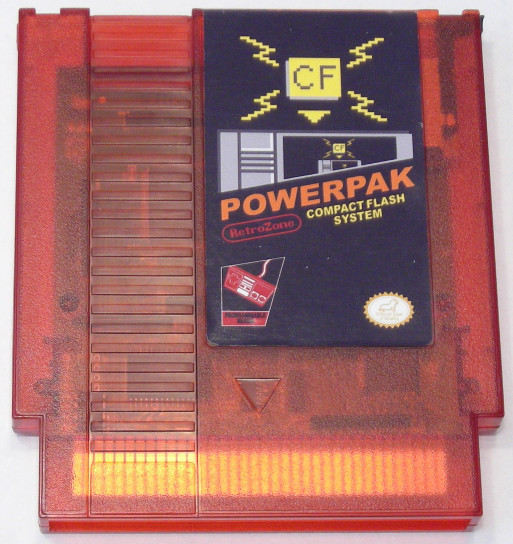
link: http://www.retrousb.com/product_info.ph ... ucts_id=34
Price: $135
Pros:
• Can play most NES and FC games
• Can play FDS games
• Multi region lockout chip
• Built in Game Genie support
Cons:
• SRAM saving is not automatic (See "PowerMappers")
• Very simple menus - hard to read and navigate
• Requires adapter to be used on Famicom (no FC version)
• Hasn't seen an official update in many years
• Compatible with less games than the N8 Pro
For a while, I believe this was the only flash cart option for the NES. It's pretty standard in comparison to today's flash cart. You load the OS and some ROMs on a Compact Flash memory card, put the memory card in the PowerPak, put the PowerPak in your NES and play.
I won’t bother going into detail about game support. If you want to know, go to the PowerPak page on Retro Zone's site (linked above) and check out the supported mappers table. Check out this mapper list, the numbers in parenthesis are the numbers used on the compatibility table. edit: I've read that the mapper support table on the Retro Zone website isn't up to date, which might make things a little confusing.
Support for Famicom Disk System (FDS) games is amazing. To be clear about how it works, you only need your NES console, a PowerPak, and some FDS ROMs to be able to play FDS games on your NES. You would load a FDS game the same way you would load a NES game.
Since the OS/mapper files are stored on the memory card, they're easily updateable. Many updates have become available since the cart was first released. Both official and unofficial. The community has created some of their own updates for the PowerPak. For example, the member "loopy" from NesDev forums gave us Famicom Disk System support as well as added support / worked out bugs for various mappers. Loopy's additions were then added to the official mapper files. And the member "thefox" from the NesDev forums has given us save states for certain mappers.
PowerMappers: http://kkfos.aspekt.fi/projects/nes/pow ... ermappers/
Loopy's FDS mappers: http://forums.nesdev.com/viewtopic.php?f=9&t=4351
Loopy's update: http://forums.nesdev.com/viewtopic.php? ... t=powerpak
It isn't clear to me what exactly is included in the official mappers at this point. I know that the official mapper files haven't been updated in years. I know that they include some of loopy's work, but I'm not sure if it includes his latest updates. Best bet is to copy the latest official mappers to your CF card, then copy loopy's latest mappers over it. At least, that's what I've read.
__________
UPDATE: The Save State Mappers have been updated and rebranded to PowerMappers. This mapper set gives you the ability to use save states for 15 different mappers. It will allow you 5 slots per game, per save state file. When you load a ROM, you choose a save state file to load with it (which allows you five slots).
Even if you don't care about save states, you might consider this mod for the in-game menu. The in-game menu is where you save and load states, but it also allows you to reset the game or return to the PowerPak menu. So, you can reset and power cycle without ever having to get up!
Another huge benefit of the save state mappers is the way they work. They read/write directly to the CF card, no holding down reset required (see cons below). Best part is, they capture SRAM. So normally you'd have to hold down reset to back up your SRAM (see below), but if you use a save state it'll save directly to the card.
What's more, the in-game menu is very useful for SRAM saves as well. When you're playing a game that uses SRAM, when you select to return to the PowerPak menu from the in-game menu, it'll go to the screen that lets you back up the SRAM to the CF card. So either using save states or the in-game menu, you don't have to hold down reset to back up saves.
The PowerMappers have some cons, however. Some mappers might be a little buggy. Game Genie codes are ignored. I rarely use Game Genie codes on the NES, so this didn't bother me. But I'll show you a little trick. First make a copy of your POWERPAK folder on your CF card, then rename the copy to "[OLD]POWERPAK". Then copy the PowerMappers to your original POWERPAK folder. Now, if you ever want to use Game Genie codes, just rename the folders. The one that is named simply "POWERPAK" is the one that'll take effect.
__________
Now for some cons of the PowerPak:
All the cons I can think of for the PowerPak aren't HUGE, they're more just annoyances than anything else. None of these cons get in the way of actually playing games, but since other NES flash carts are on the market, we have to consider them.
1.) The PowerPak uses a CF (compact flash) card. CF cards and card readers are still readily available today, but just not as common as SD has become. Retro Zone claims that CF means faster loading than SD, sighting parallel versus serial interface, but we now have flash carts that use SD and load games just as fast if not faster than the PowerPak. Some people find having to use CF cards annoying. Most people already have SD card readers (they're built into a lot of modern laptops) but might not already own a CF card reader. You must be careful with CF cards, the sockets have pins that are pretty fragile and easy to bend if you jam a card in there wrong. SD cards are a lot more durable, there's no risk of bending pins.
2.) The most annoying con, in my opinion, is the way SRAM saving works.
The PowerPak will not create save files for you automatically. You must download a blank save file from Retro Zone, you download just one and duplicate it as needed. For each game that uses save RAM, you have to manual rename a blank save file to exactly match the file name of the ROM (you must do this on the computer side). If you have a ROM and save file with matching file names, the PowerPak will automatically load the save file for you when you select that game.
So, the PowerPak won’t automatically create save files, but what's even worse is that SRAM is not written back to the CF card automatically either! This is easily my least favorite part of the PowerPak. When you're playing a game that uses SRAM, before you shut the console off, you must hold the console’s reset button for 5 seconds then choose an option to backup the SRAM to the CF card. Failure to do this means your save file will not be written back to the CF card!
The downside to all of this is that having to do things manual can be very annoying. And since you must manually back up the saves, there's the possibility of losing save data (like if the power goes out unexpectedly, or you simply forget to hold reset before powering off the console). The upside is that you could create multiple save files for each game, if you needed to. And since they don't back up automatically, if you accidentally delete a save file or save over the wrong slot or something, you’re not screwed.
[edit] One work around for this SRAM mess is the unofficial PowerMappers, mentioned above. PowerMappers will write saves states directly to the CF card without having to hold reset. And since the save states capture SRAM, you can use it as a sort of pseudo way of saving. The only downside is that you still have to manual create a save state file for each game. The PowerMappers' in-game menu also has the ability to reset to the PowerPak menu. When playing a game that uses SRAM, if you choose this option you'll be brought to the screen that lets you back up SRAM, so you don't have to hold reset.[/edit]
3.) The PowerPak menus are VERY basic. Simple white text on a black background. You don't need flashy menus to play games, but the PowerPak menus can be hard to look at. I find it hard to browse my games folder. It's also hard to be descriptive with file names when you want to have multiple versions of the same game. And the menu isn’t kind to overscan, so the top line might be cut off on some TVs. Overall, the menus are very unpleasant.
4.) ROMs are not alphabetically sorted. When you browse to your ROMs folder on the PowerPak, the games will just be in whatever order you put them on the card in. A fix is to download a sorting app. It's easy, it's just a small app that takes two seconds to sort your CF card. But it is an extra step that seems kind of annoying when other flash carts on the market today will auto sort games for you. The only other work around is to copy all the games at once. But this is annoying if you already have a few dozen on there and you want to add one or two. You'd have to erase all the games from the card, then copy them all back.
5.) There's no Famicom version of the PowerPak. This isn't really a con, but I suppose it's worth mentioning. Some people use a Famicom and not a NES. If you want to use the PowerPak on a Famicom, you must use an adapter. The N8 flash cart comes in a NES and a FC version.
6.) There hasn't been an official software update for the PowerPak for some time now. If you download the mapper files from Retro Zone, the date modified shows 10/19/2010. Luckily there has been a few unofficial updates, but the PowerMappers is the only update I've come across that's worth mentioning.
Does anyone know of any other unofficial updates for the PowerPak that are worth mentioning? Please share!
It might sound like I'm being very critical of the PowerPak, but I'm not. Most of these cons are relatively minor. It DOES play games (that it supports playing) and it does it well. The only major con is the very manual way it handles save data, which is super annoying, but very few NES games have save data anyway.
Price: $135
Pros:
• Can play most NES and FC games
• Can play FDS games
• Multi region lockout chip
• Built in Game Genie support
Cons:
• SRAM saving is not automatic (See "PowerMappers")
• Very simple menus - hard to read and navigate
• Requires adapter to be used on Famicom (no FC version)
• Hasn't seen an official update in many years
• Compatible with less games than the N8 Pro
For a while, I believe this was the only flash cart option for the NES. It's pretty standard in comparison to today's flash cart. You load the OS and some ROMs on a Compact Flash memory card, put the memory card in the PowerPak, put the PowerPak in your NES and play.
I won’t bother going into detail about game support. If you want to know, go to the PowerPak page on Retro Zone's site (linked above) and check out the supported mappers table. Check out this mapper list, the numbers in parenthesis are the numbers used on the compatibility table. edit: I've read that the mapper support table on the Retro Zone website isn't up to date, which might make things a little confusing.
Support for Famicom Disk System (FDS) games is amazing. To be clear about how it works, you only need your NES console, a PowerPak, and some FDS ROMs to be able to play FDS games on your NES. You would load a FDS game the same way you would load a NES game.
Since the OS/mapper files are stored on the memory card, they're easily updateable. Many updates have become available since the cart was first released. Both official and unofficial. The community has created some of their own updates for the PowerPak. For example, the member "loopy" from NesDev forums gave us Famicom Disk System support as well as added support / worked out bugs for various mappers. Loopy's additions were then added to the official mapper files. And the member "thefox" from the NesDev forums has given us save states for certain mappers.
PowerMappers: http://kkfos.aspekt.fi/projects/nes/pow ... ermappers/
Loopy's FDS mappers: http://forums.nesdev.com/viewtopic.php?f=9&t=4351
Loopy's update: http://forums.nesdev.com/viewtopic.php? ... t=powerpak
It isn't clear to me what exactly is included in the official mappers at this point. I know that the official mapper files haven't been updated in years. I know that they include some of loopy's work, but I'm not sure if it includes his latest updates. Best bet is to copy the latest official mappers to your CF card, then copy loopy's latest mappers over it. At least, that's what I've read.
__________
UPDATE: The Save State Mappers have been updated and rebranded to PowerMappers. This mapper set gives you the ability to use save states for 15 different mappers. It will allow you 5 slots per game, per save state file. When you load a ROM, you choose a save state file to load with it (which allows you five slots).
Even if you don't care about save states, you might consider this mod for the in-game menu. The in-game menu is where you save and load states, but it also allows you to reset the game or return to the PowerPak menu. So, you can reset and power cycle without ever having to get up!
Another huge benefit of the save state mappers is the way they work. They read/write directly to the CF card, no holding down reset required (see cons below). Best part is, they capture SRAM. So normally you'd have to hold down reset to back up your SRAM (see below), but if you use a save state it'll save directly to the card.
What's more, the in-game menu is very useful for SRAM saves as well. When you're playing a game that uses SRAM, when you select to return to the PowerPak menu from the in-game menu, it'll go to the screen that lets you back up the SRAM to the CF card. So either using save states or the in-game menu, you don't have to hold down reset to back up saves.
The PowerMappers have some cons, however. Some mappers might be a little buggy. Game Genie codes are ignored. I rarely use Game Genie codes on the NES, so this didn't bother me. But I'll show you a little trick. First make a copy of your POWERPAK folder on your CF card, then rename the copy to "[OLD]POWERPAK". Then copy the PowerMappers to your original POWERPAK folder. Now, if you ever want to use Game Genie codes, just rename the folders. The one that is named simply "POWERPAK" is the one that'll take effect.
__________
Now for some cons of the PowerPak:
All the cons I can think of for the PowerPak aren't HUGE, they're more just annoyances than anything else. None of these cons get in the way of actually playing games, but since other NES flash carts are on the market, we have to consider them.
1.) The PowerPak uses a CF (compact flash) card. CF cards and card readers are still readily available today, but just not as common as SD has become. Retro Zone claims that CF means faster loading than SD, sighting parallel versus serial interface, but we now have flash carts that use SD and load games just as fast if not faster than the PowerPak. Some people find having to use CF cards annoying. Most people already have SD card readers (they're built into a lot of modern laptops) but might not already own a CF card reader. You must be careful with CF cards, the sockets have pins that are pretty fragile and easy to bend if you jam a card in there wrong. SD cards are a lot more durable, there's no risk of bending pins.
2.) The most annoying con, in my opinion, is the way SRAM saving works.
The PowerPak will not create save files for you automatically. You must download a blank save file from Retro Zone, you download just one and duplicate it as needed. For each game that uses save RAM, you have to manual rename a blank save file to exactly match the file name of the ROM (you must do this on the computer side). If you have a ROM and save file with matching file names, the PowerPak will automatically load the save file for you when you select that game.
So, the PowerPak won’t automatically create save files, but what's even worse is that SRAM is not written back to the CF card automatically either! This is easily my least favorite part of the PowerPak. When you're playing a game that uses SRAM, before you shut the console off, you must hold the console’s reset button for 5 seconds then choose an option to backup the SRAM to the CF card. Failure to do this means your save file will not be written back to the CF card!
The downside to all of this is that having to do things manual can be very annoying. And since you must manually back up the saves, there's the possibility of losing save data (like if the power goes out unexpectedly, or you simply forget to hold reset before powering off the console). The upside is that you could create multiple save files for each game, if you needed to. And since they don't back up automatically, if you accidentally delete a save file or save over the wrong slot or something, you’re not screwed.
[edit] One work around for this SRAM mess is the unofficial PowerMappers, mentioned above. PowerMappers will write saves states directly to the CF card without having to hold reset. And since the save states capture SRAM, you can use it as a sort of pseudo way of saving. The only downside is that you still have to manual create a save state file for each game. The PowerMappers' in-game menu also has the ability to reset to the PowerPak menu. When playing a game that uses SRAM, if you choose this option you'll be brought to the screen that lets you back up SRAM, so you don't have to hold reset.[/edit]
3.) The PowerPak menus are VERY basic. Simple white text on a black background. You don't need flashy menus to play games, but the PowerPak menus can be hard to look at. I find it hard to browse my games folder. It's also hard to be descriptive with file names when you want to have multiple versions of the same game. And the menu isn’t kind to overscan, so the top line might be cut off on some TVs. Overall, the menus are very unpleasant.
4.) ROMs are not alphabetically sorted. When you browse to your ROMs folder on the PowerPak, the games will just be in whatever order you put them on the card in. A fix is to download a sorting app. It's easy, it's just a small app that takes two seconds to sort your CF card. But it is an extra step that seems kind of annoying when other flash carts on the market today will auto sort games for you. The only other work around is to copy all the games at once. But this is annoying if you already have a few dozen on there and you want to add one or two. You'd have to erase all the games from the card, then copy them all back.
5.) There's no Famicom version of the PowerPak. This isn't really a con, but I suppose it's worth mentioning. Some people use a Famicom and not a NES. If you want to use the PowerPak on a Famicom, you must use an adapter. The N8 flash cart comes in a NES and a FC version.
6.) There hasn't been an official software update for the PowerPak for some time now. If you download the mapper files from Retro Zone, the date modified shows 10/19/2010. Luckily there has been a few unofficial updates, but the PowerMappers is the only update I've come across that's worth mentioning.
Does anyone know of any other unofficial updates for the PowerPak that are worth mentioning? Please share!
It might sound like I'm being very critical of the PowerPak, but I'm not. Most of these cons are relatively minor. It DOES play games (that it supports playing) and it does it well. The only major con is the very manual way it handles save data, which is super annoying, but very few NES games have save data anyway.
link: NES | Famicom
Price: $118


Pros:
• All the features of the PowerPak and more!
• Auto SRAM backup (except for FDS games)
• Optional USB port for developers
• Both NES and FC cart versions available
Cons:
• Only 1 save state slot per game
This overview of the N8 assumes that you have read above about the PowerPak.
The Everdrive N8 basically took all my minor complaints with the PowerPak and fixed them, then added even more features! As far as I know, the N8 is capable of everything the PowerPak can do, plus more.
The N8 uses SD cards and can load games fast. SRAM (save game data) is backed up automatically, no need to hold the rest button to back up saves to the memory card. The only exception is FDS games, which you still need to hold reset to back up saves for (FDS games don't have a save file, they save inside the ROM).
The N8 received a massive OS update in 2020 and now supports many mappers (only 7 not supported) and save states are now supported on all mappers! Changelog here: http://krikzz.com/pub/support/everdrive ... gelist.txt
Price: $118
Pros:
• All the features of the PowerPak and more!
• Auto SRAM backup (except for FDS games)
• Optional USB port for developers
• Both NES and FC cart versions available
Cons:
• Only 1 save state slot per game
This overview of the N8 assumes that you have read above about the PowerPak.
The Everdrive N8 basically took all my minor complaints with the PowerPak and fixed them, then added even more features! As far as I know, the N8 is capable of everything the PowerPak can do, plus more.
The N8 uses SD cards and can load games fast. SRAM (save game data) is backed up automatically, no need to hold the rest button to back up saves to the memory card. The only exception is FDS games, which you still need to hold reset to back up saves for (FDS games don't have a save file, they save inside the ROM).
The N8 received a massive OS update in 2020 and now supports many mappers (only 7 not supported) and save states are now supported on all mappers! Changelog here: http://krikzz.com/pub/support/everdrive ... gelist.txt
Link: https://krikzz.com/store/home/57-n8-pro.html
Price: $170


The Everdrive N8 Pro is an updated version of the original N8. It can do everything the original version can do and more. It looks like it supports all known mappers. It supports 99 save states per game (the original N8 only supported 1 save state per game). It has an in-game menu. Full comparison can be found in the chart below.

Price: $170
The Everdrive N8 Pro is an updated version of the original N8. It can do everything the original version can do and more. It looks like it supports all known mappers. It supports 99 save states per game (the original N8 only supported 1 save state per game). It has an in-game menu. Full comparison can be found in the chart below.
FDSSTICK (from loopy) (Review updated: 4/20/20)
Link: USA | International
Price: $30
This isn't exactly a flash cart, it's more appropriately called a drive emulator, but it works very similar to flash carts. It's equal parts flash cart, driver emulator, and backup device. I plan to put this here as well as the drive emulator section.
• Holds 255 disk sides (128Mbit flash) with a built-in game selection menu.
• Write games to FDSStick over USB, then connect to a FDS RAM adapter to play.
• Push the button to change disks (once for side A, twice for side B, etc.) or hold to eject.
• Leave the USB side connected to run games directly from a PC.
• Read and write disks from an FDS drive with an adapter cable (not included).
• Game Doctor disk format is fully supported.
This YouTube video isn't explained it weel. Just note that the user in that YouTube video has an older version of the stick with less memory.
Price: $30
This isn't exactly a flash cart, it's more appropriately called a drive emulator, but it works very similar to flash carts. It's equal parts flash cart, driver emulator, and backup device. I plan to put this here as well as the drive emulator section.
• Holds 255 disk sides (128Mbit flash) with a built-in game selection menu.
• Write games to FDSStick over USB, then connect to a FDS RAM adapter to play.
• Push the button to change disks (once for side A, twice for side B, etc.) or hold to eject.
• Leave the USB side connected to run games directly from a PC.
• Read and write disks from an FDS drive with an adapter cable (not included).
• Game Doctor disk format is fully supported.
This YouTube video isn't explained it weel. Just note that the user in that YouTube video has an older version of the stick with less memory.
If you’re on a budget, I would recommend the original N8. If you want the Rolls Royce, get the N8 Pro. The FDSSTICK is only for FDS games, it's not a good choice if you want a flash cart for NES/FC games.

Some important info regarding SNES flash carts:
• Some SNES carts contain a special enhancement chip or co-processor. Popular examples would be the GSU (aka Super FX) found in Star Fox and Yoshi's Island, the SA-1 found in Super Mario RPG, the DSP1 found in Super Mario Kart, or the S-DD1 found in Star Ocean. They are proprietary hardware; you can't buy them. For this reason, it's not easy implementing the ability to play such games on SNES flash carts. There are exceptions, however.
• The DSP chip can more easily be used with SNES flash carts. Either directly on board the cart, or through a piggyback fashion. It's because the DSP is the only enhancement chip that doesn't control access to the ROM data.
• Some SNES flash carts were made before the cloned SNES lockout chip was created, but have since updated to it. If you're buying second hand, you might want to check to see what kind of lockout chip it has (if any). If you're buying new, don't worry, as far as I know all SNES flash carts now have the cloned lockout chip.
• The limitations of the clone CIC: The clone CIC will allow you to boot a cart on any region consoles. However, some games have a region check in the ROM data that is separate from the lockout chip ("This game is not designed for..." message). These games can be patched to remove the region check. You only have to worry about this when trying to play NTSC-U/J games on a PAL consoles, or vise versa.
• For a more detailed explanation of SNES/SFC region lockout, see this post: http://www.racketboy.com/forum/viewtopi ... 95#p913995
• The DSP chip can more easily be used with SNES flash carts. Either directly on board the cart, or through a piggyback fashion. It's because the DSP is the only enhancement chip that doesn't control access to the ROM data.
• Some SNES flash carts were made before the cloned SNES lockout chip was created, but have since updated to it. If you're buying second hand, you might want to check to see what kind of lockout chip it has (if any). If you're buying new, don't worry, as far as I know all SNES flash carts now have the cloned lockout chip.
• The limitations of the clone CIC: The clone CIC will allow you to boot a cart on any region consoles. However, some games have a region check in the ROM data that is separate from the lockout chip ("This game is not designed for..." message). These games can be patched to remove the region check. You only have to worry about this when trying to play NTSC-U/J games on a PAL consoles, or vise versa.
• For a more detailed explanation of SNES/SFC region lockout, see this post: http://www.racketboy.com/forum/viewtopi ... 95#p913995
link: http://www.tototek.com/pio/main1/SUBMEN ... flash1.jpg
Price: $60 (plus shipping from China) - Looks like the Super Flash Cart is no longer available, but I will keep this info up anyway. Read on if you’re interested in how flash carts worked before they started using removable storage. Otherwise, just skip this one.

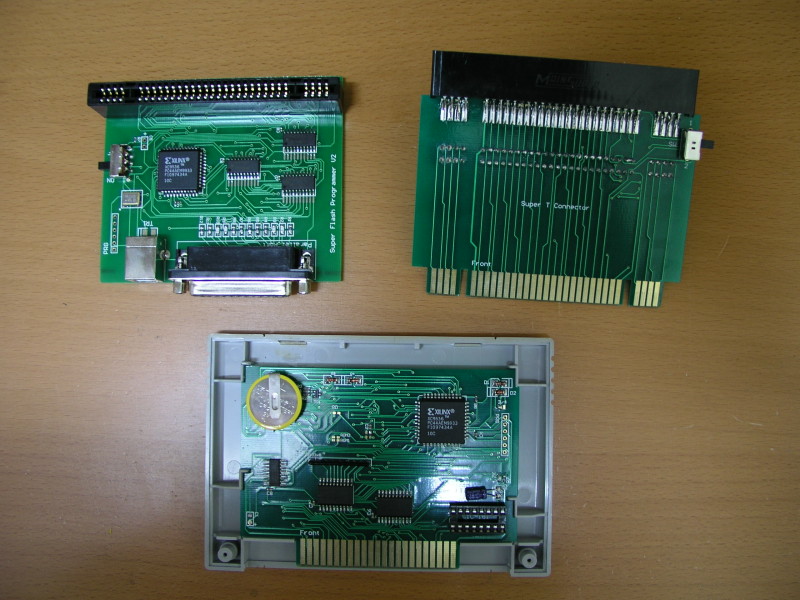
Pros:
• Supports 48Mb size ROMs (largest officially released)
• Now includes clone lockout chip (works in any region)
• Optionally supports DSP1 (T-connector required)
• Ability to read/write SRAM on retail carts
• Ability to dump ROMs from retail carts
Cons:
• Uses limited internal storage (64Mbits) for ROMs
• Can hold max 4 games at once (not exceeding 64 Mbits)
• Requires separate programmer to flash the cart
• Programmer requires parallel port that supports EPP*
• Programmer requires PC software
• Cart only holds one SRAM game save at a time
*Update: There's a project that I stumbled upon. It's a USB programmer with software for the Super Flash Cart. This is not offered from Tototek, so your mileage may vary.
https://github.com/bazzinotti/SuperFlashUSB
This flash cart is not nearly as user friendly as modern flash carts, but I feel like it can still be a good option. It now contains the clone CIC lockout chip, which all current SNES flash carts use, but that's just about all it shares with newer SNES flash carts.
It's worth noting that the Super Flash Cart now includes the clone lockout chip that works in every region, but it didn't use to. If buying used, you may want to find out what lockout chip is installed on it. Older versions would include NTSC-U/J lockout chips only, and PAL users would have to install the lockout chip themselves, or otherwise use the T-connector (more details on the T-connector below).
The most obvious problem with this flash cart, by today's standards, is no removable storage. As already explained, newer flash carts use memory cards (like SD or CF) in which to store game ROMs. The Super Flash Cart does not. It has internal memory. You get 64Mb to store game ROMs, and that's all you ever have. This has two drawbacks.
One, the obvious, is the limited size. SNES games can range from 4Mb to 48Mb (that's Megabits, not MegaBytes). So, while it's big enough for the largest officially released games, it's not big enough to hold your entire game collection at once. You can hold a max of four games at once. That means any time you want to put different games on the cart you must reflash it.
And two, since there's no removable media, there's no chance to easily update the cart. But don't worry, this cart is so limited in features that updates won’t do you much.
You can load a maximum of four ROMs to the cart at once, as long as they don't exceed 64Mb in combined size. If you load just one ROM onto the cart, when you put the cart in your SNES and power it on it'll boot right to the game (flash carts that use removable media to store games will always boot to a menu first). If you put more than one ROM on the cart at a time, when you power it on you'll be presented with a menu to choose which game to load.
You're not only limited in the number of games you can store on the cart at once, you're also limited to holding just one SRAM file at a time. That sounds horrible, I know, but consider most of the time you're only going to have one ROM stored on the cart at a time, only being able to have one SRAM doesn't matter so much. So, what do you do about the limit of one save file at a time? Let me get back to that.
A programmer is needed to flash the cart. It's simple, though. Think of the flash cart as an SD card, and think of the programmer as the card reader you'd use for the SD card. The only real problem with the programmer is that it interfaces with your PC via a parallel port (needs to support EPP mode). Remember how you use to hook your printer up before USB? It was with the parallel port. Unless you have an old computer, chances are good that you don't have a parallel port. If you have a desktop, you could probably get an add-on card.
The programmer requires its own software in order to work. You use all the programmer's functions with the software. I know that the software works on XP, but I have no idea if it works on more modern versions of Windows.
So, this all sounds complicated, but it really isn't. Plug the programmer into your computer, both parallel and USB cables (parallel cable is for data, USB is just for power). Plug a SNES cart or the Super Flash Cart into the programmer. Launch the software for the programmer. Now choose to read ROM data, read/write SRAM, or flash game(s) to the Super Flash Cart.
Remember how I said you can only hold one SRAM save at a time? This is how you work around that. The programmer can read and write the SRAM on the flash cart. So, if you want to switch to another game, you can backup the SRAM and store it on your PC. You can also write the SRAM back to the flash cart.
What's more, you can use legit SNES carts with the programmer. You can dump ROM data (create your own ROMs from your carts). You can also read and write the SRAM on legit carts! This means you can back up your saves, and restore them if needed. You can change batteries without losing your saves, or just back them up in case. You can swap the SRAM between legit carts, the flash cart, and emulators! Although, emulator saves might need to be converted first. This has many benefits. If this is something that interests you, read my mini review of the Retrode below!
The Super Flash Cart can optionally support DSP1 games with the T-connector (sold separately).
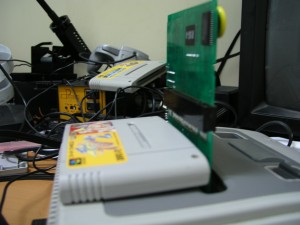
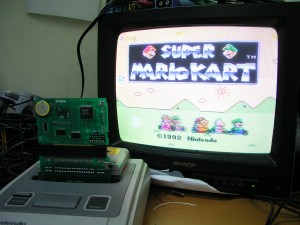
Here's how it works: You plug the T-connector into your SNES, plug the Super Flash Cart on top of the T-Connector, then plug a legit cart that contains the DSP1 chip (but not SRAM) into the side of the T-Connector. The T-connector piggybacks the DSP1 for use with the flash cart.
This might seem... well... lame, clunky, etc. Who wants that monstrosity plugged into their SNES? Well, I can say one positive thing about it: You don't have to rob the DSP1 chip from a legit cart like you do with other SNES flash carts. Why does that matter? Read my thoughts about preservation below this post.
Note: The T-connector use to also be used for the lockout chip. The Super Flash Cart now has the cloned lockout chip that works on any region, so you no longer need to worry about that.
Price: $60 (plus shipping from China) - Looks like the Super Flash Cart is no longer available, but I will keep this info up anyway. Read on if you’re interested in how flash carts worked before they started using removable storage. Otherwise, just skip this one.
Pros:
• Supports 48Mb size ROMs (largest officially released)
• Now includes clone lockout chip (works in any region)
• Optionally supports DSP1 (T-connector required)
• Ability to read/write SRAM on retail carts
• Ability to dump ROMs from retail carts
Cons:
• Uses limited internal storage (64Mbits) for ROMs
• Can hold max 4 games at once (not exceeding 64 Mbits)
• Requires separate programmer to flash the cart
• Programmer requires parallel port that supports EPP*
• Programmer requires PC software
• Cart only holds one SRAM game save at a time
*Update: There's a project that I stumbled upon. It's a USB programmer with software for the Super Flash Cart. This is not offered from Tototek, so your mileage may vary.
https://github.com/bazzinotti/SuperFlashUSB
This flash cart is not nearly as user friendly as modern flash carts, but I feel like it can still be a good option. It now contains the clone CIC lockout chip, which all current SNES flash carts use, but that's just about all it shares with newer SNES flash carts.
It's worth noting that the Super Flash Cart now includes the clone lockout chip that works in every region, but it didn't use to. If buying used, you may want to find out what lockout chip is installed on it. Older versions would include NTSC-U/J lockout chips only, and PAL users would have to install the lockout chip themselves, or otherwise use the T-connector (more details on the T-connector below).
The most obvious problem with this flash cart, by today's standards, is no removable storage. As already explained, newer flash carts use memory cards (like SD or CF) in which to store game ROMs. The Super Flash Cart does not. It has internal memory. You get 64Mb to store game ROMs, and that's all you ever have. This has two drawbacks.
One, the obvious, is the limited size. SNES games can range from 4Mb to 48Mb (that's Megabits, not MegaBytes). So, while it's big enough for the largest officially released games, it's not big enough to hold your entire game collection at once. You can hold a max of four games at once. That means any time you want to put different games on the cart you must reflash it.
And two, since there's no removable media, there's no chance to easily update the cart. But don't worry, this cart is so limited in features that updates won’t do you much.
You can load a maximum of four ROMs to the cart at once, as long as they don't exceed 64Mb in combined size. If you load just one ROM onto the cart, when you put the cart in your SNES and power it on it'll boot right to the game (flash carts that use removable media to store games will always boot to a menu first). If you put more than one ROM on the cart at a time, when you power it on you'll be presented with a menu to choose which game to load.
You're not only limited in the number of games you can store on the cart at once, you're also limited to holding just one SRAM file at a time. That sounds horrible, I know, but consider most of the time you're only going to have one ROM stored on the cart at a time, only being able to have one SRAM doesn't matter so much. So, what do you do about the limit of one save file at a time? Let me get back to that.
A programmer is needed to flash the cart. It's simple, though. Think of the flash cart as an SD card, and think of the programmer as the card reader you'd use for the SD card. The only real problem with the programmer is that it interfaces with your PC via a parallel port (needs to support EPP mode). Remember how you use to hook your printer up before USB? It was with the parallel port. Unless you have an old computer, chances are good that you don't have a parallel port. If you have a desktop, you could probably get an add-on card.
The programmer requires its own software in order to work. You use all the programmer's functions with the software. I know that the software works on XP, but I have no idea if it works on more modern versions of Windows.
So, this all sounds complicated, but it really isn't. Plug the programmer into your computer, both parallel and USB cables (parallel cable is for data, USB is just for power). Plug a SNES cart or the Super Flash Cart into the programmer. Launch the software for the programmer. Now choose to read ROM data, read/write SRAM, or flash game(s) to the Super Flash Cart.
Remember how I said you can only hold one SRAM save at a time? This is how you work around that. The programmer can read and write the SRAM on the flash cart. So, if you want to switch to another game, you can backup the SRAM and store it on your PC. You can also write the SRAM back to the flash cart.
What's more, you can use legit SNES carts with the programmer. You can dump ROM data (create your own ROMs from your carts). You can also read and write the SRAM on legit carts! This means you can back up your saves, and restore them if needed. You can change batteries without losing your saves, or just back them up in case. You can swap the SRAM between legit carts, the flash cart, and emulators! Although, emulator saves might need to be converted first. This has many benefits. If this is something that interests you, read my mini review of the Retrode below!
The Super Flash Cart can optionally support DSP1 games with the T-connector (sold separately).
Here's how it works: You plug the T-connector into your SNES, plug the Super Flash Cart on top of the T-Connector, then plug a legit cart that contains the DSP1 chip (but not SRAM) into the side of the T-Connector. The T-connector piggybacks the DSP1 for use with the flash cart.
This might seem... well... lame, clunky, etc. Who wants that monstrosity plugged into their SNES? Well, I can say one positive thing about it: You don't have to rob the DSP1 chip from a legit cart like you do with other SNES flash carts. Why does that matter? Read my thoughts about preservation below this post.
Note: The T-connector use to also be used for the lockout chip. The Super Flash Cart now has the cloned lockout chip that works on any region, so you no longer need to worry about that.
link: https://krikzz.com/store/home/53-super- ... ve-x5.html
Price: $55


Features:
• Max. ROM size up to 7.5MByte
• Max. Save RAM sizeo up to 128KByte
• Instant Loading
• SuperKey. This function eliminates region locks
• Improved EverDrive menu (compared to previous super-ed generations)
• Micro SD cards support up to 128GB*
• GameGenie cheat codes
• Low power consumption
• Hi quality 4-layer PCB
• OS supports up to 1000 files per folder
• Supported with any SNES/SFC16 system
*Cards bigger than 32GB require custom formatting tools.
Cartridge uses custom made multi region shell. It fits in both American and euro/jap systems.
A no-frills SNES flash cart. It does not support any games that use an enhancement chip (list of games linked above) but supports virtually every other game.
Price: $55
Features:
• Max. ROM size up to 7.5MByte
• Max. Save RAM sizeo up to 128KByte
• Instant Loading
• SuperKey. This function eliminates region locks
• Improved EverDrive menu (compared to previous super-ed generations)
• Micro SD cards support up to 128GB*
• GameGenie cheat codes
• Low power consumption
• Hi quality 4-layer PCB
• OS supports up to 1000 files per folder
• Supported with any SNES/SFC16 system
*Cards bigger than 32GB require custom formatting tools.
Cartridge uses custom made multi region shell. It fits in both American and euro/jap systems.
A no-frills SNES flash cart. It does not support any games that use an enhancement chip (list of games linked above) but supports virtually every other game.
Super EverDrive X6 (from Krikzz)
link: https://krikzz.com/store/home/53-super- ... ve-x5.html
Price: $79
Does everything the X5 can do, but also supports all DSP chips (DSP-1, DSP-1B, DSP-2, DSP-3, and DSP-4). Krikzz use to offer DSP support on past Super ED models, back before the X nomenclature. I'm glad to see that he brought it back!
Price: $79
Does everything the X5 can do, but also supports all DSP chips (DSP-1, DSP-1B, DSP-2, DSP-3, and DSP-4). Krikzz use to offer DSP support on past Super ED models, back before the X nomenclature. I'm glad to see that he brought it back!
link: http://www.retrousb.com/product_info.ph ... ucts_id=84
Price: Discontinued
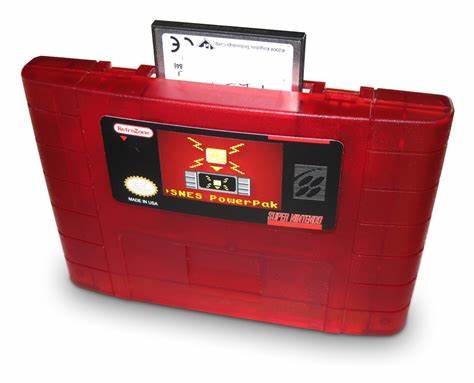
Pros:
• Supports ROMs up to 96Mb
• Supports Game Genie codes
• Cloned lockout chip, works in any region
• Supports DSP1 games (*)
• Uses 100% brand new parts (*)
Cons:
• SRAM not automatic
• Very basic menus**
• Discontinued – No more updates expected
• Files are not auto-sorted
You more or less get the same functionality from the SNES PowerPak that you would from the Super Everdrive. The major differences are: The Super Everdrive uses SD cards while the SNES PowerPak uses CF cards. The Super Everdrive supports 8 lines of Game Genie codes, the SNES PowerPak supports 5 lines. They both have simple menus, but I think the Super Everdrive's menus are much more pleasant to look at. The Super Everdrive supports a max ROM size of 60 Mb, while the SNES PowerPak supports a max ROM size of 96 Mb. The biggest difference, in my opinion, is that SRAM is handled automatically with the Super Everdrive while it's manual with the SNES PowerPak.
The SNES PowerPak supports a modified version of Star Ocean. The largest officially released SNES game was 48 Mb, but the SNES PowerPak supports a max ROM image of 96Mb. You might be thinking, "So, what?" Well, the only real benefit you get from that right now is Star Ocean. This game was not released outside of Japan but has since been translated by fans. However, the game uses the S-DD1 enhancement chip, which is not currently supported by the SNES PowerPak. However, there's a hack that decompresses all the graphics, removing the need for the S-DD1 and making it playable on the SNES PowerPak. However, since the graphics are decompressed, the ROM size becomes 96Mb (which is double the size of the largest officially released game). So, it's only playable on a flash cart that can load a ROM as large as 96Mb.
Like the NES PowerPak, SRAM is not handled automatically. For each game that requires SRAM saves, you need to manually put an SRAM file on the CF card. You need to manually rename the file the same name as your ROM so that it'll automatically load with the ROM. To back up the SRAM to the CF card, you need to hold reset on your SNES for 5 seconds to go back to the menus. Having to hold reset to backup the save data gives you the possibility to accidentally lose your progress. I go into more detail about this in my overview of the NES PowerPak.
The menus are very basic, similar to the NES PowerPak. They can just be hard to look at, especially when browsing for games. There's also a limit to the amount of characters that can be displayed for each file, making navigating through your game list that much more difficult. It makes giving descriptive names to a game hard, especially if you want to have multiple versions of the same game.
**However, there's an unofficial upgrade for the SNES PowerPak that gives us MUCH better looking menus, and some other nice features as well. It requires you to not only update the OS files on the CF card, but also the boot ROM (which can now be done with just the CF card).
https://github.com/Ramsis-SNES/snes-pow ... irmware-v3
For any SNES PowerPak owner, I highly recommend upgrading to this custom firmware. The menus are MUCH better to look at. The font is easy reading, the menus can display more characters for each file name, the menus work more intuitively. There's a small amount of customizing you can do to the menus (a few different backgrounds to choose from, different cursors, etc). There are some other improvements as well, like better load time, and it fixes bugs found in the stock firmware, but the main attraction is better looking menus.
The SNES PowerPak does not automatically sort files. When browsing your games on the CF card using the PowerPak, they will not be alphabetized. This is very annoying, although there's a simple fix. You can get a very simple drive sorting app. They're easy to use. On your PC, you just launch the app and tell it to sort the CF card (or specify a folder, like your games folder since that's the only one you'll really need to have alphabetized), hit a button, and done! It takes all of a few seconds. However, it IS an extra step, and the Super Everdrive can sort files by itself.
*Like the Super Everdrive, the SNES PowerPak can support the DSP1 chip in the same way. When the SNES PowerPak was first released, you had the option whether or not to include the DSP1 chip preinstalled (if you chose not to include it, you could add it yourself if wanted). But after a while, it was sold with the DSP1 chip already installed and you did not have an option not to include it. So if you’re buying used, be sure to check if it has the DSP1 installed or not.
When the SNES PowerPak was first released, it did not include the cloned CIC lockout chip. So if you're buying second hand, you'll want to ask if it has the clone CIC or not.
Price: Discontinued
Pros:
• Supports ROMs up to 96Mb
• Supports Game Genie codes
• Cloned lockout chip, works in any region
• Supports DSP1 games (*)
• Uses 100% brand new parts (*)
Cons:
• SRAM not automatic
• Very basic menus**
• Discontinued – No more updates expected
• Files are not auto-sorted
You more or less get the same functionality from the SNES PowerPak that you would from the Super Everdrive. The major differences are: The Super Everdrive uses SD cards while the SNES PowerPak uses CF cards. The Super Everdrive supports 8 lines of Game Genie codes, the SNES PowerPak supports 5 lines. They both have simple menus, but I think the Super Everdrive's menus are much more pleasant to look at. The Super Everdrive supports a max ROM size of 60 Mb, while the SNES PowerPak supports a max ROM size of 96 Mb. The biggest difference, in my opinion, is that SRAM is handled automatically with the Super Everdrive while it's manual with the SNES PowerPak.
The SNES PowerPak supports a modified version of Star Ocean. The largest officially released SNES game was 48 Mb, but the SNES PowerPak supports a max ROM image of 96Mb. You might be thinking, "So, what?" Well, the only real benefit you get from that right now is Star Ocean. This game was not released outside of Japan but has since been translated by fans. However, the game uses the S-DD1 enhancement chip, which is not currently supported by the SNES PowerPak. However, there's a hack that decompresses all the graphics, removing the need for the S-DD1 and making it playable on the SNES PowerPak. However, since the graphics are decompressed, the ROM size becomes 96Mb (which is double the size of the largest officially released game). So, it's only playable on a flash cart that can load a ROM as large as 96Mb.
Like the NES PowerPak, SRAM is not handled automatically. For each game that requires SRAM saves, you need to manually put an SRAM file on the CF card. You need to manually rename the file the same name as your ROM so that it'll automatically load with the ROM. To back up the SRAM to the CF card, you need to hold reset on your SNES for 5 seconds to go back to the menus. Having to hold reset to backup the save data gives you the possibility to accidentally lose your progress. I go into more detail about this in my overview of the NES PowerPak.
The menus are very basic, similar to the NES PowerPak. They can just be hard to look at, especially when browsing for games. There's also a limit to the amount of characters that can be displayed for each file, making navigating through your game list that much more difficult. It makes giving descriptive names to a game hard, especially if you want to have multiple versions of the same game.
**However, there's an unofficial upgrade for the SNES PowerPak that gives us MUCH better looking menus, and some other nice features as well. It requires you to not only update the OS files on the CF card, but also the boot ROM (which can now be done with just the CF card).
https://github.com/Ramsis-SNES/snes-pow ... irmware-v3
For any SNES PowerPak owner, I highly recommend upgrading to this custom firmware. The menus are MUCH better to look at. The font is easy reading, the menus can display more characters for each file name, the menus work more intuitively. There's a small amount of customizing you can do to the menus (a few different backgrounds to choose from, different cursors, etc). There are some other improvements as well, like better load time, and it fixes bugs found in the stock firmware, but the main attraction is better looking menus.
The SNES PowerPak does not automatically sort files. When browsing your games on the CF card using the PowerPak, they will not be alphabetized. This is very annoying, although there's a simple fix. You can get a very simple drive sorting app. They're easy to use. On your PC, you just launch the app and tell it to sort the CF card (or specify a folder, like your games folder since that's the only one you'll really need to have alphabetized), hit a button, and done! It takes all of a few seconds. However, it IS an extra step, and the Super Everdrive can sort files by itself.
*Like the Super Everdrive, the SNES PowerPak can support the DSP1 chip in the same way. When the SNES PowerPak was first released, you had the option whether or not to include the DSP1 chip preinstalled (if you chose not to include it, you could add it yourself if wanted). But after a while, it was sold with the DSP1 chip already installed and you did not have an option not to include it. So if you’re buying used, be sure to check if it has the DSP1 installed or not.
When the SNES PowerPak was first released, it did not include the cloned CIC lockout chip. So if you're buying second hand, you'll want to ask if it has the clone CIC or not.
Status / Support Link: http://sd2snes.de/blog/status
Purchase Link: https://krikzz.com/store/home/54-fxpak-pro.html
Price: $197


FEATURES:
• Micro SD card support (tested up to 200GB; no exFAT support so Micro SD card must be reformatted using FAT32)
• Fast ROM loading (~9MB/s)
• Fast menu navigation
• Directories are sorted automatically, no need for FAT sorting tools
• High resolution menu (512×224) for adequate display of long file names
• Real Time Clock
• Supports ROM size up to 128MBit (96Mbit actually implemented)
• Automatic near-time SRAM saving to micro SD Card.
• Enhancement chip support (see below for implementation status)
• MSU-1 can be used in conjunction with all enhancement chips
• SuperCIC key (SNES CIC clone):
• -enables operation on unmodified consoles of all regions
• -supports software 50/60Hz switching on SuperCIC enhanced consoles only
• Auto region patching
• Hi quality 4-layers PCB
SUPPORTED ENHANCEMENT CHIPS:
• BS-X memory map / Satellaview base unit registers (clock)
• DSP-1/1B
• DSP-2
• DSP-3
• DSP-4
• ST-010
• Cx4
• MSU-1
• S-RTC
• OBC-1
• GSU (Super FX)
• SA-1
This is the Rolls Royce of SNES flash carts. The original hardware was named Sd2snes. The FPGA that was used in the original version was becoming harder to source, so they went with a newer incarnation which happened to be more powerful. And so the name was changed to Sd2snes Pro. It supports everything the original Sd2snes did, but since it has a more powerful FPGA there are hopes for some new features. The name had to be changed to FXPAK Pro since SD is trademarked.
If you want enhancement chip support outside of DSP1, this is your only choice! It’s a little annoying that there is still no menu support for cheat codes. Hopefully that’ll get implemented already. And with the more powerful “Pro” hardware, there’s speculation of adding save state support.
Purchase Link: https://krikzz.com/store/home/54-fxpak-pro.html
Price: $197
FEATURES:
• Micro SD card support (tested up to 200GB; no exFAT support so Micro SD card must be reformatted using FAT32)
• Fast ROM loading (~9MB/s)
• Fast menu navigation
• Directories are sorted automatically, no need for FAT sorting tools
• High resolution menu (512×224) for adequate display of long file names
• Real Time Clock
• Supports ROM size up to 128MBit (96Mbit actually implemented)
• Automatic near-time SRAM saving to micro SD Card.
• Enhancement chip support (see below for implementation status)
• MSU-1 can be used in conjunction with all enhancement chips
• SuperCIC key (SNES CIC clone):
• -enables operation on unmodified consoles of all regions
• -supports software 50/60Hz switching on SuperCIC enhanced consoles only
• Auto region patching
• Hi quality 4-layers PCB
SUPPORTED ENHANCEMENT CHIPS:
• BS-X memory map / Satellaview base unit registers (clock)
• DSP-1/1B
• DSP-2
• DSP-3
• DSP-4
• ST-010
• Cx4
• MSU-1
• S-RTC
• OBC-1
• GSU (Super FX)
• SA-1
This is the Rolls Royce of SNES flash carts. The original hardware was named Sd2snes. The FPGA that was used in the original version was becoming harder to source, so they went with a newer incarnation which happened to be more powerful. And so the name was changed to Sd2snes Pro. It supports everything the original Sd2snes did, but since it has a more powerful FPGA there are hopes for some new features. The name had to be changed to FXPAK Pro since SD is trademarked.
If you want enhancement chip support outside of DSP1, this is your only choice! It’s a little annoying that there is still no menu support for cheat codes. Hopefully that’ll get implemented already. And with the more powerful “Pro” hardware, there’s speculation of adding save state support.
So to sum it up: If you want the best game compatibility, then you must get the FXPAK Pro. If you want the best value, then get the Super Everdrive X5. Check the link above for a list of games with special enhancement chips. If you don't care about any of the games on this list, then go with the X5. The new X6 is a great option if you want DSP support but don't want to shell out the money for the FX Pak Pro.

Everdrive 64 v2.5 (from Krikzz): (Review updated: 4/20/20)
link: https://krikzz.com/store/home/30-everdrive-64-v25.html
Price: $112


Features:
• Supports both PAL and NTSC systems.
• Custom made multi region shell. Cartridge fits in any console
• 64Mbyte (512mbit) SDRAM for ROM data (max ROM size 64Mbyte)
• SD cards are supported
• FAT16/FAT32 support. Unlimited partition size for FAT32
• SD to SDRAM transfer speed up to 23 Mbyte/s
• Emulation features
• Gamepack saves support (SRAM, SRAM128Kbyte, EEPROM16k, EEPROM4k, FlashRam)
• GameShark cheats
• IPS/APS patches
• No extra software needed
Earlier versions of the Everdrive 64 needed to rob a lockout chip from a real N64 cart. Nintendo used a few different model lockout chips in N64 carts, so this meant you couldn’t get 100% compatibility on the ED64. However, all current versions of the ED64 have a cloned lockout chip that can emulate every model lockout chip in every region. If you’re buying used, you should check with the seller which type of lockout chip is in there.
Cons:
In order to back up your saves to the SD card, you must press the console reset button before turning off the console. Failure to reset the console means that your save data will be lost! The X7 writes your save data back to the SD card automatically (you don’t have to press reset).
Price: $112
Features:
• Supports both PAL and NTSC systems.
• Custom made multi region shell. Cartridge fits in any console
• 64Mbyte (512mbit) SDRAM for ROM data (max ROM size 64Mbyte)
• SD cards are supported
• FAT16/FAT32 support. Unlimited partition size for FAT32
• SD to SDRAM transfer speed up to 23 Mbyte/s
• Emulation features
• Gamepack saves support (SRAM, SRAM128Kbyte, EEPROM16k, EEPROM4k, FlashRam)
• GameShark cheats
• IPS/APS patches
• No extra software needed
Earlier versions of the Everdrive 64 needed to rob a lockout chip from a real N64 cart. Nintendo used a few different model lockout chips in N64 carts, so this meant you couldn’t get 100% compatibility on the ED64. However, all current versions of the ED64 have a cloned lockout chip that can emulate every model lockout chip in every region. If you’re buying used, you should check with the seller which type of lockout chip is in there.
Cons:
In order to back up your saves to the SD card, you must press the console reset button before turning off the console. Failure to reset the console means that your save data will be lost! The X7 writes your save data back to the SD card automatically (you don’t have to press reset).
Link: https://krikzz.com/store/home/55-everdrive-64-x7.html
Price: $175

Features:
• Supports both PAL and NTSC systems.
• UltraCIC III with region auto detection.
• RTC support.
• Micro SD cards are supported.
• Fast loading. Speed up to 23 Mbyte/s.
• Supports .nes ROM format via built-in emulator.
• Gamepak saves support (SRAM, SRAM128Kbyte, EEPROM16k, EEPROM4k, FlashRam)
• GameShark cheats.
• IPS/APS patches.
• USB port for development.
The X7 only has a couple of benefits over the v2.5. You don’t have to press reset to backup your saves, and it has a real time clock. As far as I know, there’s only 1 N64 game that uses the real time clock: Animal Crossing. The X7 also has a USB port, but that’s only useful for developers.
Price: $175
Features:
• Supports both PAL and NTSC systems.
• UltraCIC III with region auto detection.
• RTC support.
• Micro SD cards are supported.
• Fast loading. Speed up to 23 Mbyte/s.
• Supports .nes ROM format via built-in emulator.
• Gamepak saves support (SRAM, SRAM128Kbyte, EEPROM16k, EEPROM4k, FlashRam)
• GameShark cheats.
• IPS/APS patches.
• USB port for development.
The X7 only has a couple of benefits over the v2.5. You don’t have to press reset to backup your saves, and it has a real time clock. As far as I know, there’s only 1 N64 game that uses the real time clock: Animal Crossing. The X7 also has a USB port, but that’s only useful for developers.
link: http://64drive.retroactive.be/features.php
Price: $199
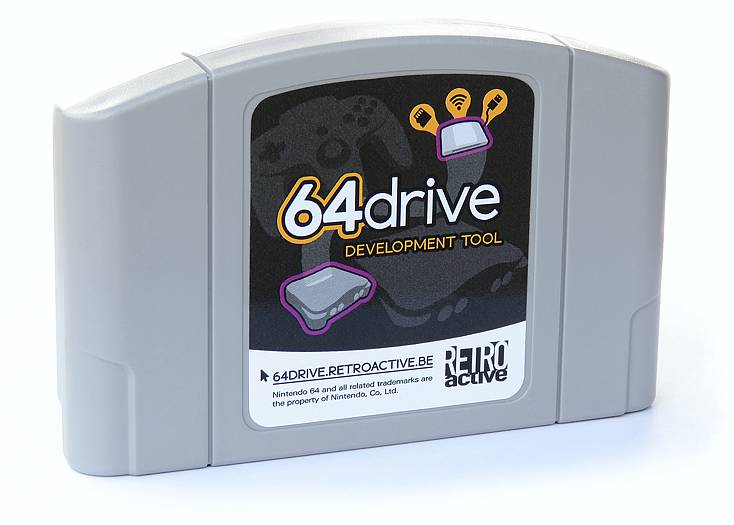
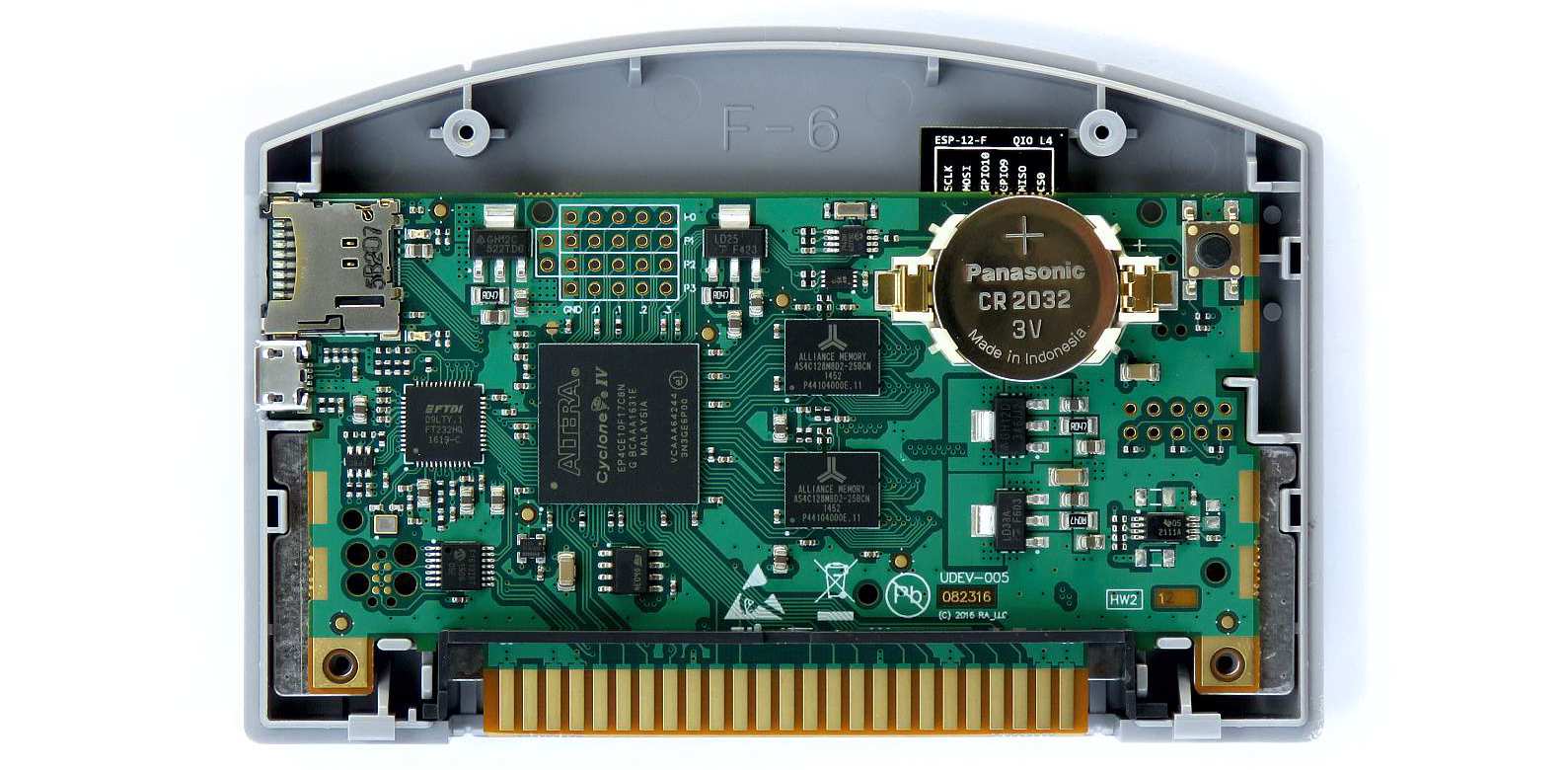
The 64drive is comparable (feature-wise) to the ED64 X7. I’ve never used a 64drive myself, but it seems like it may be more user friendly than the ED64.
The 64drive now has an option device called ULTRASAVE CART TOOL: http://64drive.retroactive.be/features.php#ultrasave
This tool cost an additional $20 and requires a 64drive to work. Unfortunately, you cannot use it without a 64drive as it appears to re-purpose some of the hardware in the 64drive in order to function. It works similar to the Retrode. Check the website for more info.
Price: $199
The 64drive is comparable (feature-wise) to the ED64 X7. I’ve never used a 64drive myself, but it seems like it may be more user friendly than the ED64.
The 64drive now has an option device called ULTRASAVE CART TOOL: http://64drive.retroactive.be/features.php#ultrasave
This tool cost an additional $20 and requires a 64drive to work. Unfortunately, you cannot use it without a 64drive as it appears to re-purpose some of the hardware in the 64drive in order to function. It works similar to the Retrode. Check the website for more info.

Everdrive GB X3, X5, X7(from Krikzz): (Review updated: 4/20/20)
X7 Link: https://krikzz.com/store/home/46-everdrive-gb.html
Price: $129
X5 Link: https://krikzz.com/store/home/47-everdrive-gb.html
Price: $89
X3 Link: https://krikzz.com/store/home/48-everdrive-gb.html
Price: $39


X7 Features:
• Max ROM size: 8MByte
• Max SAVE RAM size: 128KByte
• Save States function and In-Game menu function
• Isolated RTC function. "Isolated" means that multiple games can use RTC without interference. Each game will have own copy of time
• Instant loading
• Low power consumption
• High quality 4-layers PCB
• GameGenie cheat codes
• Soft reset to menu
• Supported mappers: MBC1, MBC2, MBC3, MBC5
• Micro SD cards are supported
• Compatible with all systems which supports GB and GBC cartridges (including Super Game Boy)
• OS supports up to 1000 files per folder
• PCB Rev.B (Fixed compatibility problems with Game Boy pocket)
EverDrive-GB X series comparison:
• [EverDrive-GB X5] Same as X7 minus save states, in-game menu and RTC
• [EverDrive-GB X3] Same as X5 but required reboot in menu to save game progress stored in SRAM (Like Mega-X3 or ED64-V2.5)
It’s hard to beat the X3 for the price. The only real drawback with the X3, in my opinion, is that you have to reset to the menu in order to backup the save data. This bothers me because I always worry about forgetting to do that and losing my save. I guess the upside for the GB though is that not many games save! It looks like this is the only thing the X5 will get you over the X3, so you just have to decide if that’s worth the price.
The X7 has a real time clock, which might be important to you (Pokemon). Save states and an in-game menu are nice, but a luxury. The X3 is all that you need if you just want a no-frills way to play games.
Price: $129
X5 Link: https://krikzz.com/store/home/47-everdrive-gb.html
Price: $89
X3 Link: https://krikzz.com/store/home/48-everdrive-gb.html
Price: $39
X7 Features:
• Max ROM size: 8MByte
• Max SAVE RAM size: 128KByte
• Save States function and In-Game menu function
• Isolated RTC function. "Isolated" means that multiple games can use RTC without interference. Each game will have own copy of time
• Instant loading
• Low power consumption
• High quality 4-layers PCB
• GameGenie cheat codes
• Soft reset to menu
• Supported mappers: MBC1, MBC2, MBC3, MBC5
• Micro SD cards are supported
• Compatible with all systems which supports GB and GBC cartridges (including Super Game Boy)
• OS supports up to 1000 files per folder
• PCB Rev.B (Fixed compatibility problems with Game Boy pocket)
EverDrive-GB X series comparison:
• [EverDrive-GB X5] Same as X7 minus save states, in-game menu and RTC
• [EverDrive-GB X3] Same as X5 but required reboot in menu to save game progress stored in SRAM (Like Mega-X3 or ED64-V2.5)
It’s hard to beat the X3 for the price. The only real drawback with the X3, in my opinion, is that you have to reset to the menu in order to backup the save data. This bothers me because I always worry about forgetting to do that and losing my save. I guess the upside for the GB though is that not many games save! It looks like this is the only thing the X5 will get you over the X3, so you just have to decide if that’s worth the price.
The X7 has a real time clock, which might be important to you (Pokemon). Save states and an in-game menu are nice, but a luxury. The X3 is all that you need if you just want a no-frills way to play games.
Link: https://krikzz.com/store/home/42-everdrive-gba-x5.html
Price: $99


Features:
• All save types supported, no ROM patching required
• Fast Loading (most games load within 1 - 2 seconds)
• 256Mbit PSRAM (32MByte) ROM memory
• 1Mbit SRAM (128KByte) save memory
• Real-time clock support
• Low power consumption
• Micro SD cards are supported (up to 64GB)
• FAT32 support
• Supported with GameCube player, some revisions of Super Retro Advance adapter and other GBA accessories
• NES, GB and GBC ROM formats are support (emulation mode)
This is your only real choice for a GBA flash cart these days. This is the first and as far as I know only GBA flash cart that uses removable storage.
Price: $99
Features:
• All save types supported, no ROM patching required
• Fast Loading (most games load within 1 - 2 seconds)
• 256Mbit PSRAM (32MByte) ROM memory
• 1Mbit SRAM (128KByte) save memory
• Real-time clock support
• Low power consumption
• Micro SD cards are supported (up to 64GB)
• FAT32 support
• Supported with GameCube player, some revisions of Super Retro Advance adapter and other GBA accessories
• NES, GB and GBC ROM formats are support (emulation mode)
This is your only real choice for a GBA flash cart these days. This is the first and as far as I know only GBA flash cart that uses removable storage.

Master Everdrive X7 (from Krikzz): (Review updated: 4/20/20)
Link: https://krikzz.com/store/home/51-master-everdrive.html
Price: $129


Features:
• Max ROM size: 4MByte
• Max SAVE RAM size: 32KByte
• Save States function and In-Game menu function (*)
• Instant loading
• SMS and SG-1000 games are supported
• Low power consumption
• High quality 4-layers PCB
• Soft reset to menu
• Micro SD cards are supported
• OS supports up to 1000 files per folder
(*) Due the hardware specifics, in-game menu and save state function does not work with Japanese Mark-III and Genesis/MegaDrive with Power Base Converter
This is your only real choice for a Master System flash cart these days. Another option would be a Genesis / MegaDrive Everdrive that can load SMS and function as a Power Base Converter on a Genesis or MegaDrive.
Price: $129
Features:
• Max ROM size: 4MByte
• Max SAVE RAM size: 32KByte
• Save States function and In-Game menu function (*)
• Instant loading
• SMS and SG-1000 games are supported
• Low power consumption
• High quality 4-layers PCB
• Soft reset to menu
• Micro SD cards are supported
• OS supports up to 1000 files per folder
(*) Due the hardware specifics, in-game menu and save state function does not work with Japanese Mark-III and Genesis/MegaDrive with Power Base Converter
This is your only real choice for a Master System flash cart these days. Another option would be a Genesis / MegaDrive Everdrive that can load SMS and function as a Power Base Converter on a Genesis or MegaDrive.

MD Pro 64M (from Tototek): Discontinued
This flash cart has been discontinued.
link: http://www.tototek.com/store/index.php? ... ucts_id=59
Price: $60 (plus shipping from China)
• Multi Region support (USA/JPN/EUR) (does not include 32X)
• Supports up to 31 games (Genesis and 32X)
• 40M big game size support
• Cheat codes support
• SRAM supports 4 different games with 256K save
• Battery backup SRAM, can transfer to/from computer
• Supports .SMD, .BIN, MGD2 format ROM files
• EPP parallel port required
• Software required to use programmer
IF YOU ARE INTERESTED in the MD Pro from Tototek, please read below about the FlashKit MD from Krikzz. It is a very similar product, only it doesn't require a parallel port (it uses only USB).
This is the 64M (I'm guessing that's Megabits and not Megabytes) version, there's also a 32M version here: http://www.tototek.com/store/index.php? ... ucts_id=67
The 64M and 32M seem to be exactly the same, the only difference being the size of the internal memory (64Mb versus 32Mb). Remember that 32 Megabits is equal to 4 Megabytes.
The MD Pro Tototek flash carts works just like to the Super Flash Cart from Tototek, which is reviewed above. I suggest you read the Super Flash Cart review to get an idea of how it works. edit: The new FlashKit MD from Krikzz is another very similar device for the Genesis / MegaDrive. It works the same way, but does not require a parallel port.
link: http://www.tototek.com/store/index.php? ... ucts_id=59
Price: $60 (plus shipping from China)
• Multi Region support (USA/JPN/EUR) (does not include 32X)
• Supports up to 31 games (Genesis and 32X)
• 40M big game size support
• Cheat codes support
• SRAM supports 4 different games with 256K save
• Battery backup SRAM, can transfer to/from computer
• Supports .SMD, .BIN, MGD2 format ROM files
• EPP parallel port required
• Software required to use programmer
IF YOU ARE INTERESTED in the MD Pro from Tototek, please read below about the FlashKit MD from Krikzz. It is a very similar product, only it doesn't require a parallel port (it uses only USB).
This is the 64M (I'm guessing that's Megabits and not Megabytes) version, there's also a 32M version here: http://www.tototek.com/store/index.php? ... ucts_id=67
The 64M and 32M seem to be exactly the same, the only difference being the size of the internal memory (64Mb versus 32Mb). Remember that 32 Megabits is equal to 4 Megabytes.
The MD Pro Tototek flash carts works just like to the Super Flash Cart from Tototek, which is reviewed above. I suggest you read the Super Flash Cart review to get an idea of how it works. edit: The new FlashKit MD from Krikzz is another very similar device for the Genesis / MegaDrive. It works the same way, but does not require a parallel port.
Mega EverDrive X3 (Review updated: 4/20/20)
Link: https://krikzz.com/store/home/45-mega-everdrive-x3.html
Price: $39

Sega Genesis, Sega Mega Drive, Sega Master System, and 32X files supported.
64mbit (8mbyte) PSRAM.
56mbit (7mbyte) max ROM size.
FAT32 file system supported.
Micro SD cards up to 32GB.
Fast loading (2-4 sec).
Built in audio playback. GYM, TFC
Regular game battery back-up saves.
CD BIOS loading.
Cheats feature. Game Genie and Play-Action Replay format supported.

Price: $39
Sega Genesis, Sega Mega Drive, Sega Master System, and 32X files supported.
64mbit (8mbyte) PSRAM.
56mbit (7mbyte) max ROM size.
FAT32 file system supported.
Micro SD cards up to 32GB.
Fast loading (2-4 sec).
Built in audio playback. GYM, TFC
Regular game battery back-up saves.
CD BIOS loading.
Cheats feature. Game Genie and Play-Action Replay format supported.
Link: https://krikzz.com/store/home/44-mega-everdrive-x5.html
Price: $89

64mbit (8mbyte) PSRAM.
56mbit (7mbyte) max ROM size.
128Kbyte Battery RAM
FAT32 file system supported.
Micro SD cards up to 32GB.
Fast loading (2-4 sec).
Built in audio playback. GYM, TFC
Regular game battery back-up saves.
Sega Genesis, Sega Mega Drive, Sega Master System, and 32X files supported.
Hardware MEGAKEY.
CD BIOS loading.
CD RAM cart feature.
Cheats feature. Game Genie and Play-Action Replay format supported.
Price: $89
64mbit (8mbyte) PSRAM.
56mbit (7mbyte) max ROM size.
128Kbyte Battery RAM
FAT32 file system supported.
Micro SD cards up to 32GB.
Fast loading (2-4 sec).
Built in audio playback. GYM, TFC
Regular game battery back-up saves.
Sega Genesis, Sega Mega Drive, Sega Master System, and 32X files supported.
Hardware MEGAKEY.
CD BIOS loading.
CD RAM cart feature.
Cheats feature. Game Genie and Play-Action Replay format supported.
Link: https://krikzz.com/store/home/33-mega-everdrive-x7.html
Price: $166


Sega Genesis, Sega Mega Drive, Sega Master System, and 32X files supported.
128mbit (16mbyte) PSRAM.
120mbit (15mbyte) max ROM size.
256Kbyte Battery RAM
Master System FM core
YM2413 core by Necronomfive
EEPROM and SRAM saves support
Firmware update through micro SD card
FAT32 file system supported.
Micro SD cards up to 32GB.
Instant loading (1-2 sec).
Built in audio playback. WAV, GYM, TFC
USB port for homebrew development and for future features.
In-game menu that allows access back to menu system without leaving the sofa.
Snapshot Saves.
Regular game battery back-up saves.
Hardware MEGAKEY.
CD BIOS loading.
CD RAM cart feature.
Cheats feature. Game Genie and Play-Action Replay format supported.

Price: $166
Sega Genesis, Sega Mega Drive, Sega Master System, and 32X files supported.
128mbit (16mbyte) PSRAM.
120mbit (15mbyte) max ROM size.
256Kbyte Battery RAM
Master System FM core
YM2413 core by Necronomfive
EEPROM and SRAM saves support
Firmware update through micro SD card
FAT32 file system supported.
Micro SD cards up to 32GB.
Instant loading (1-2 sec).
Built in audio playback. WAV, GYM, TFC
USB port for homebrew development and for future features.
In-game menu that allows access back to menu system without leaving the sofa.
Snapshot Saves.
Regular game battery back-up saves.
Hardware MEGAKEY.
CD BIOS loading.
CD RAM cart feature.
Cheats feature. Game Genie and Play-Action Replay format supported.
Link: https://krikzz.com/store/home/59-mega-e ... e-pro.html
Price:$199

Features:
Cyclone IV FPGA
16MB PSRAM and 1MB SRAM memory
High quality 6-layers PCB with hard gold surface finish
Supported ROM formats: Genesis, 32X, Mega-CD, Master System, NES*
Ram cart for Mega-CD
CD bios swap function turns off region locks for Mega-CD games
Hardware MegaKey turns off region locks for Genesis games
YM2413 core for Master System games
SVP core support
Pier Solar mapper support
In-game menu. You can save game or return to system menu without physical reset
In-game menu supported for Genesis and Master System modes
Full EEPROM saves support
Real time clock for logging date and time of saves
ARM based 32bit I/O co-processor for SD and USB operations acceleration
Up to 1024 files per folder or unlimited if file sorting is disabled
Multi slot save states. 100 save states slots for each game
Instant ROM loading
USB port for development and system update without removing SD card
Battery voltage monitoring. Battery can be replaced in time if it runs dry
Game Genie cheats support
*32X games require 32X addon to be attached.
*NES core has limited compatibility. Refer to user manual for details.
*NES core currently supported only for NTSC systems.
*For Mega-SG "Zero lag" option should be turned off for NES games (accurate Genesis timings required).
Price:$199
Features:
Cyclone IV FPGA
16MB PSRAM and 1MB SRAM memory
High quality 6-layers PCB with hard gold surface finish
Supported ROM formats: Genesis, 32X, Mega-CD, Master System, NES*
Ram cart for Mega-CD
CD bios swap function turns off region locks for Mega-CD games
Hardware MegaKey turns off region locks for Genesis games
YM2413 core for Master System games
SVP core support
Pier Solar mapper support
In-game menu. You can save game or return to system menu without physical reset
In-game menu supported for Genesis and Master System modes
Full EEPROM saves support
Real time clock for logging date and time of saves
ARM based 32bit I/O co-processor for SD and USB operations acceleration
Up to 1024 files per folder or unlimited if file sorting is disabled
Multi slot save states. 100 save states slots for each game
Instant ROM loading
USB port for development and system update without removing SD card
Battery voltage monitoring. Battery can be replaced in time if it runs dry
Game Genie cheats support
*32X games require 32X addon to be attached.
*NES core has limited compatibility. Refer to user manual for details.
*NES core currently supported only for NTSC systems.
*For Mega-SG "Zero lag" option should be turned off for NES games (accurate Genesis timings required).
Link: https://terraonion.com/en/producto/megasd/
Price: $270
This is a Genesis flash cart (similar feature-wise to the Mega Everdrive X7) that can also emulate the entire Sega CD add-on. Meaning, you can use this to play Sega CD games on a Genesis without the Sega CD attached!
World’s First Mega-CD/Sega CD FPGA Optical Disc Emulator
• Plays both ISOS (bin+cue) and ROMS
• RAM based cartridge for instant boot
• Compatible with all original and region free patched Mega-CD / Sega CD bios
• Supports Megadrive / Genesis, Sega CD / Mega-CD, Master System and 32X games (requires 32X add-on)
Fully Supports original Megadrive and Genesis hardware (Nomad included but requires simple mod to get audio cd on sega cd games)
• Fully compatible with Analogue Mega Sg!
• Easy to use interface for navigating your collection with screenshots, genre, year and description
• Save State support for Megadrive and Genesis Cartridge games (8 slots)
• Built in cheat engine for Megadrive and Genesis cartridge games
• Emulates all different Genesis / Mega Drive / Master System / 32x cartridge mappers.
• Stores all different Genesis / Mega Drive / Master System / 32x cartridge saves into microsd card.
• Per game Mega-CD / Sega CD Backup RAM and Cartridge RAM stored into microsd card
• Master System FM Core
• In-Game menu for fast reboot and swapping games (Genesis / Megadrive and Mega-CD / Sega CD)
Enhanced Mega Drive games with CD audio and Mega-CD / Sega CD hardware (MSU1 like)
• 400GB Exfat microsd supported
Stone Age Gamer has a comparison charte for the three tier Mega Everdrives and Terraonion's MegaSD: https://stoneagegamer.com/megasd.html
 [/img]
Price: $270
This is a Genesis flash cart (similar feature-wise to the Mega Everdrive X7) that can also emulate the entire Sega CD add-on. Meaning, you can use this to play Sega CD games on a Genesis without the Sega CD attached!
World’s First Mega-CD/Sega CD FPGA Optical Disc Emulator
• Plays both ISOS (bin+cue) and ROMS
• RAM based cartridge for instant boot
• Compatible with all original and region free patched Mega-CD / Sega CD bios
• Supports Megadrive / Genesis, Sega CD / Mega-CD, Master System and 32X games (requires 32X add-on)
Fully Supports original Megadrive and Genesis hardware (Nomad included but requires simple mod to get audio cd on sega cd games)
• Fully compatible with Analogue Mega Sg!
• Easy to use interface for navigating your collection with screenshots, genre, year and description
• Save State support for Megadrive and Genesis Cartridge games (8 slots)
• Built in cheat engine for Megadrive and Genesis cartridge games
• Emulates all different Genesis / Mega Drive / Master System / 32x cartridge mappers.
• Stores all different Genesis / Mega Drive / Master System / 32x cartridge saves into microsd card.
• Per game Mega-CD / Sega CD Backup RAM and Cartridge RAM stored into microsd card
• Master System FM Core
• In-Game menu for fast reboot and swapping games (Genesis / Megadrive and Mega-CD / Sega CD)
Enhanced Mega Drive games with CD audio and Mega-CD / Sega CD hardware (MSU1 like)
• 400GB Exfat microsd supported
Stone Age Gamer has a comparison charte for the three tier Mega Everdrives and Terraonion's MegaSD: https://stoneagegamer.com/megasd.html
[/img]This really comes down to deciding which features you want and balancing that with the price. Keep in mind that Krikzz announced a new product that will compete with the MegaSD, so you may want to wait for that to come out before making a decision.

GG Pro 32M (from Tototek): Discontinued
This flash cart has been discontinued.
Link: http://www.tototek.com/store/index.php? ... ucts_id=82
Price: $60
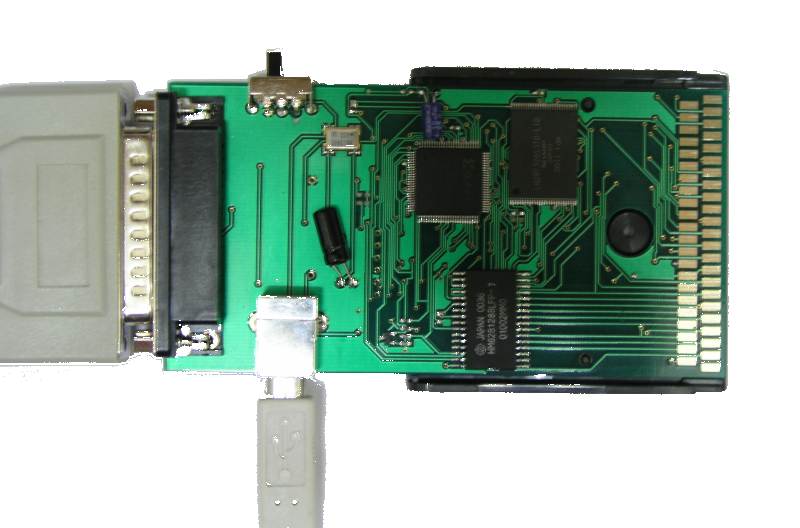
This flash cart works very similar to the way other Tototek flash carts work. One notable difference is that the programmer is built into the flash cart (which is usually a separate piece of hardware).
Link: http://www.tototek.com/store/index.php? ... ucts_id=82
Price: $60
This flash cart works very similar to the way other Tototek flash carts work. One notable difference is that the programmer is built into the flash cart (which is usually a separate piece of hardware).
Link: https://krikzz.com/store/home/58-master-everdrive.html
Price: $129

Max ROM size: 4MByte
Max SAVE RAM size: 32KByte
Save States function and In-Game menu function
Instant loading
GG and SMS games are supported
Low power consumption
High quality 4-layers PCB
Soft reset to menu
Micro SD cards are supported
OS supports up to 1000 files per folder
This is your only real choice for a Game Gear flash cart right now.
Price: $129
Max ROM size: 4MByte
Max SAVE RAM size: 32KByte
Save States function and In-Game menu function
Instant loading
GG and SMS games are supported
Low power consumption
High quality 4-layers PCB
Soft reset to menu
Micro SD cards are supported
OS supports up to 1000 files per folder
This is your only real choice for a Game Gear flash cart right now.
[CONTINUED IN NEXT POST]